
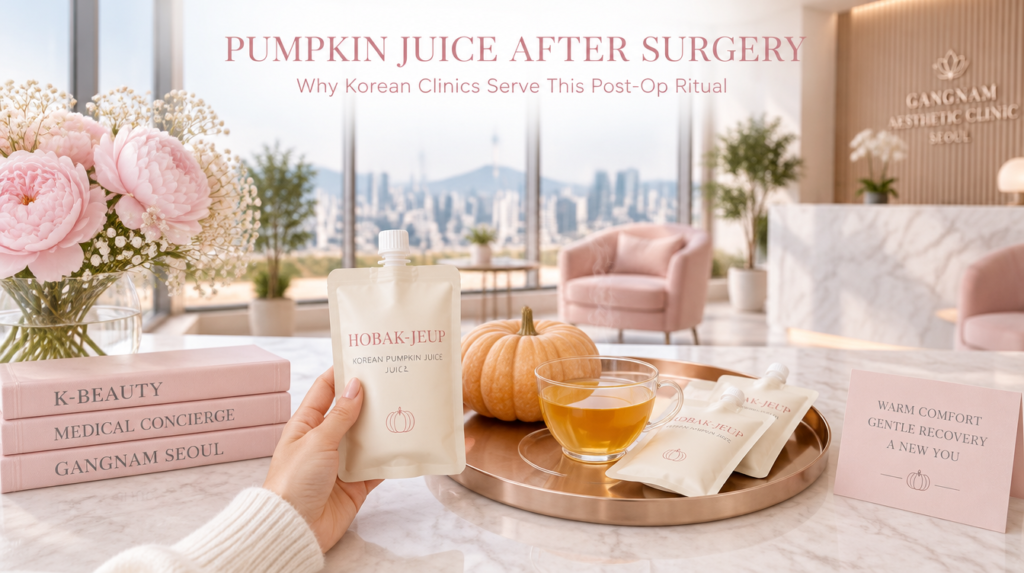
Walk out of almost any Gangnam clinic after surgery and there’s a good chance someone hands you a small pouch of warm, golden liquid. That’s pumpkin juice after surgery, known in Korea as hobak-jeup, and it’s one of the most familiar parts of recovery here.
Foreign clients often ask us two things about it. Is it a gimmick? And does it actually help with swelling?
The honest answer sits in between. This guide explains where the ritual comes from, what’s actually in a pouch, what the science does and doesn’t support, and who should check with their doctor first.
Where the Pumpkin Juice After Surgery Ritual Comes From
The habit didn’t start in plastic surgery clinics. It started in Korean postpartum care, called sanhujori.
Korean mothers have long eaten specific recovery foods after giving birth, focused on rest, warmth and easing the body back to normal (Wikipedia — Sanhujori). Swelling after childbirth is one of the main concerns, and mature pumpkin became one of the go-to foods for it.
As cosmetic surgery grew in Seoul, the same idea crossed over. Swelling is the number one worry after facial surgery, so a food Koreans already linked to puffiness became a natural fit. Today, boxes of pumpkin juice pouches sit in pharmacies across Gangnam (Korea Experience).
Pumpkin Juice, Pumpkin Tea or Pumpkin Porridge?
You’ll see all three names. They’re related but not the same:
- Hobak-jeup: a concentrated extract of mature pumpkin, sold in single-serve pouches. This is what clinics usually hand out.
- Hobak-juk: a smooth, sweet pumpkin rice porridge, useful when chewing is hard after jaw or nose surgery.
- “Pumpkin tea”: what many foreign patients call the warm pouch drink.
What’s Actually in a Pouch of Hobak-jeup
Traditional hobak-jeup is made by slow-cooking mature pumpkin, often called neulgeun hobak, and pressing out the liquid.
Pumpkin is a source of potassium, which works with sodium to regulate fluid balance in the body. That’s the main reason it’s linked to swelling.
Check the label, though. Some products are 100% pumpkin, while others are blended with apple, honey or other ingredients for taste (Korea Experience). Some “swelling teas” sold alongside them also contain herbal extracts.
Does Pumpkin Juice After Surgery Reduce Swelling?
Here’s the part most guides skip. There’s very little clinical research testing pumpkin juice on post-surgery swelling. Most claims you’ll read online come from tradition and patient experience, not controlled trials.
What we can say:
- Post-surgery swelling comes mainly from your body’s normal healing response. No drink can switch that off.
- A diet high in salt makes fluid retention worse. Swapping salty snacks for a potassium-containing drink may help a little with puffiness.
- Elevation, cold compresses as instructed, rest and gentle walking do far more for swelling than any food.
So think of pumpkin juice after surgery as a comforting, low-risk habit for most healthy people, not a treatment. If it helps you drink more fluids and eat less salt, that’s a real benefit.
Why Korean Clinics Still Serve It
The pouch does more than carry nutrients. It’s warm, easy to sip when your face is swollen, and it gives patients something to do in a recovery period that’s mostly waiting.
For many Korean patients, it’s also simply what recovery tastes like. It’s comfort, and a signal that someone is looking after you.
How to Drink Pumpkin Juice After Surgery
If your surgeon has no objection, most people follow a simple routine:
- One or two pouches a day during the first one to two weeks.
- Warm it in hot water rather than drinking it ice-cold, if your clinic prefers warm foods.
- Pair it with low-salt meals. One salty instant ramyeon can undo the effect.
- Drink plenty of plain water too.
- Choose products with pumpkin as the first ingredient and little added sugar.
Who Should Skip It or Check First
Because pumpkin juice contains potassium, a few people need to be careful.
People with chronic kidney disease, and people taking certain medications such as ACE inhibitors or potassium-sparing diuretics, can develop dangerously high potassium levels in their blood (NIH Office of Dietary Supplements).
Also check with your doctor if you:
- Have diabetes and are watching sugar, since some blends are sweetened.
- Are on a strict post-surgery diet, such as after jaw surgery.
- Plan to drink herbal “swelling teas” with ingredients your surgeon hasn’t approved.
Pumpkin Juice Quick Reference
| What to Know | |
|---|---|
| Korean name | Hobak-jeup |
| Origin | Korean postpartum care (sanhujori) |
| Why it’s linked to swelling | Contains potassium, which helps balance sodium and fluids |
| Evidence | Traditional use; little clinical research on surgery swelling |
| Typical use | 1–2 pouches a day for the first 1–2 weeks, if approved |
| Check first | Kidney disease, ACE inhibitors, potassium-sparing diuretics, diabetes |
Guardian’s Insider Note
The first pouch is usually met with suspicion. “Is this medicine?” No, it’s pumpkin.
What I tell clients is simple: it won’t do your surgeon’s job, but it’s a good reason to skip the convenience-store snacks for a week. By day three, most of them are asking where to buy more. Before the first pouch, though, I always ask about kidney problems and blood pressure medication, and pass any yes straight to the clinic.
How We Fit It Into Your Recovery
As a registered medical tourism facilitator, not a doctor, we focus on making your clinic’s aftercare easy to follow:
- Translate your surgeon’s diet instructions, including whether pumpkin juice is fine for you.
- Help you read Korean product labels at the pharmacy, so you know what’s in the pouch.
- Suggest low-salt meal options near your stay.
- Pass any health concerns, like kidney issues or medications, to your clinic before you start.
For what swelling looks like day by day, see our rhinoplasty recovery guide and our double eyelid surgery swelling timeline.
Frequently Asked Questions
Does pumpkin juice after surgery really reduce swelling? There’s little clinical research proving it. It contains potassium and can help if it replaces salty foods, but elevation and your clinic’s aftercare matter far more.
What is hobak-jeup? A concentrated drink made from mature Korean pumpkin, usually sold in single-serve pouches.
How much pumpkin juice should I drink after surgery? Most people drink one or two pouches a day for the first week or two, if their surgeon approves.
Where can I buy pumpkin juice in Seoul? Pharmacies, convenience stores and health shops across the city sell it, and some clinics include it in recovery kits.
Is pumpkin juice safe for everyone? Not everyone. People with kidney disease or on certain blood pressure medications should ask their doctor first because of its potassium content.
Is pumpkin porridge the same as pumpkin juice? No. Hobak-juk is a rice porridge; hobak-jeup is a drink. Both are common Korean recovery foods.
Plan Your Consultation
Start here: Message us with the procedure you’re considering and your travel dates.
What you get: A short online questionnaire, an initial opinion, and a written quote and schedule before you decide.
How to reach us: Message us on WhatsApp for a personalized plan, or DM us directly.
What happens in Seoul: We go with you to the clinic, translate your aftercare and diet instructions, and help you settle into a comfortable recovery.
Disclaimer: We are an officially registered medical tourism agency in Seoul, South Korea. Medical consultations and procedures are exclusively conducted by board-certified Korean doctors at accredited clinics. Individual outcomes and downtime vary.
Sources
- Wikipedia — Sanhujori (Korean postpartum care)
- NIH Office of Dietary Supplements — Potassium Fact Sheet for Consumers
- Korea Experience — Post-Surgery Recovery Meals in Seoul
- Korea Experience — Managing Bruising and Scarring After Surgery
 Confidential Consultation Intake Form
 WhatsApp
 Instagram